AI Dialectics in Fashion
Critical Design / 2024

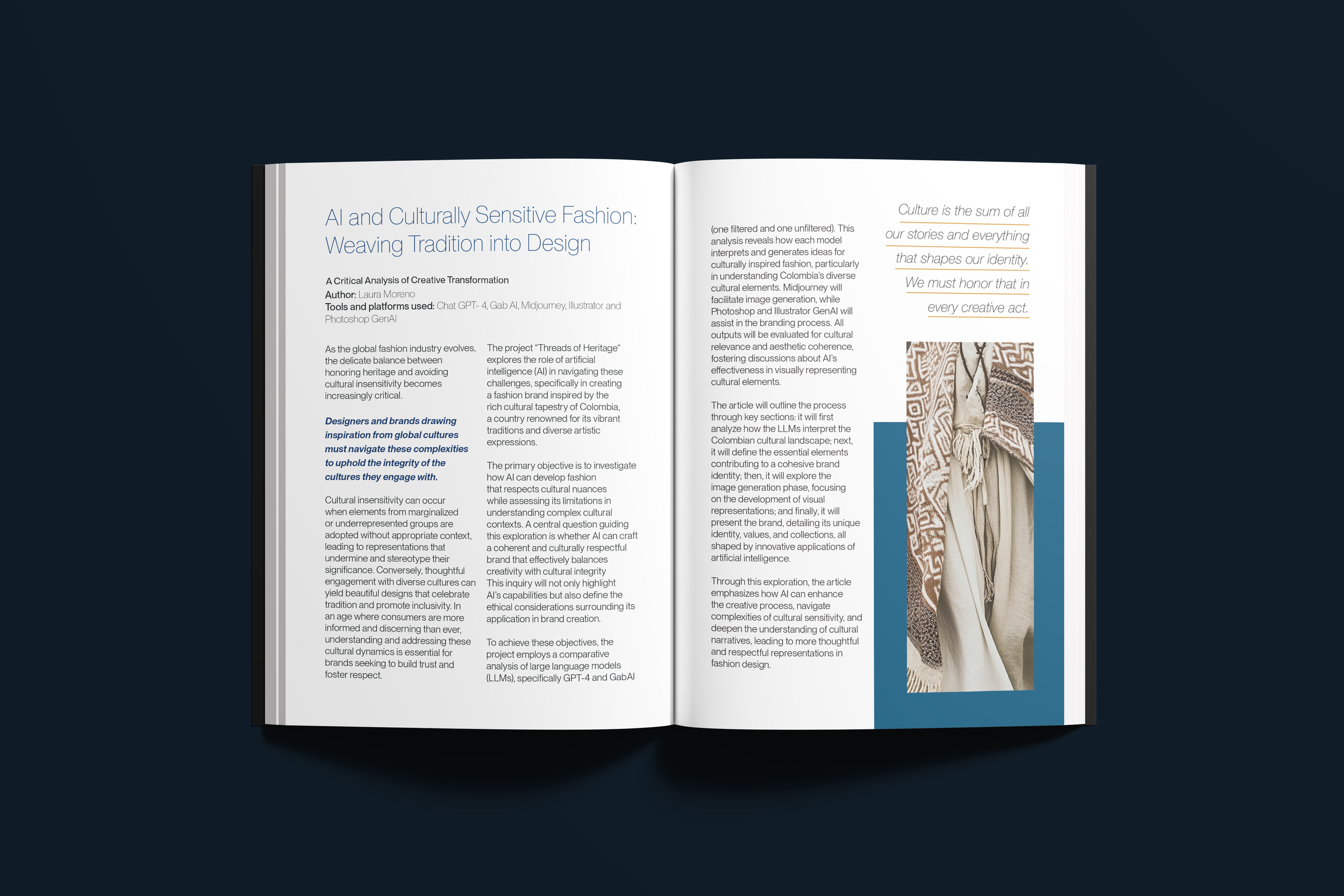
Can artificial intelligence participate responsibly in culturally informed design processes?
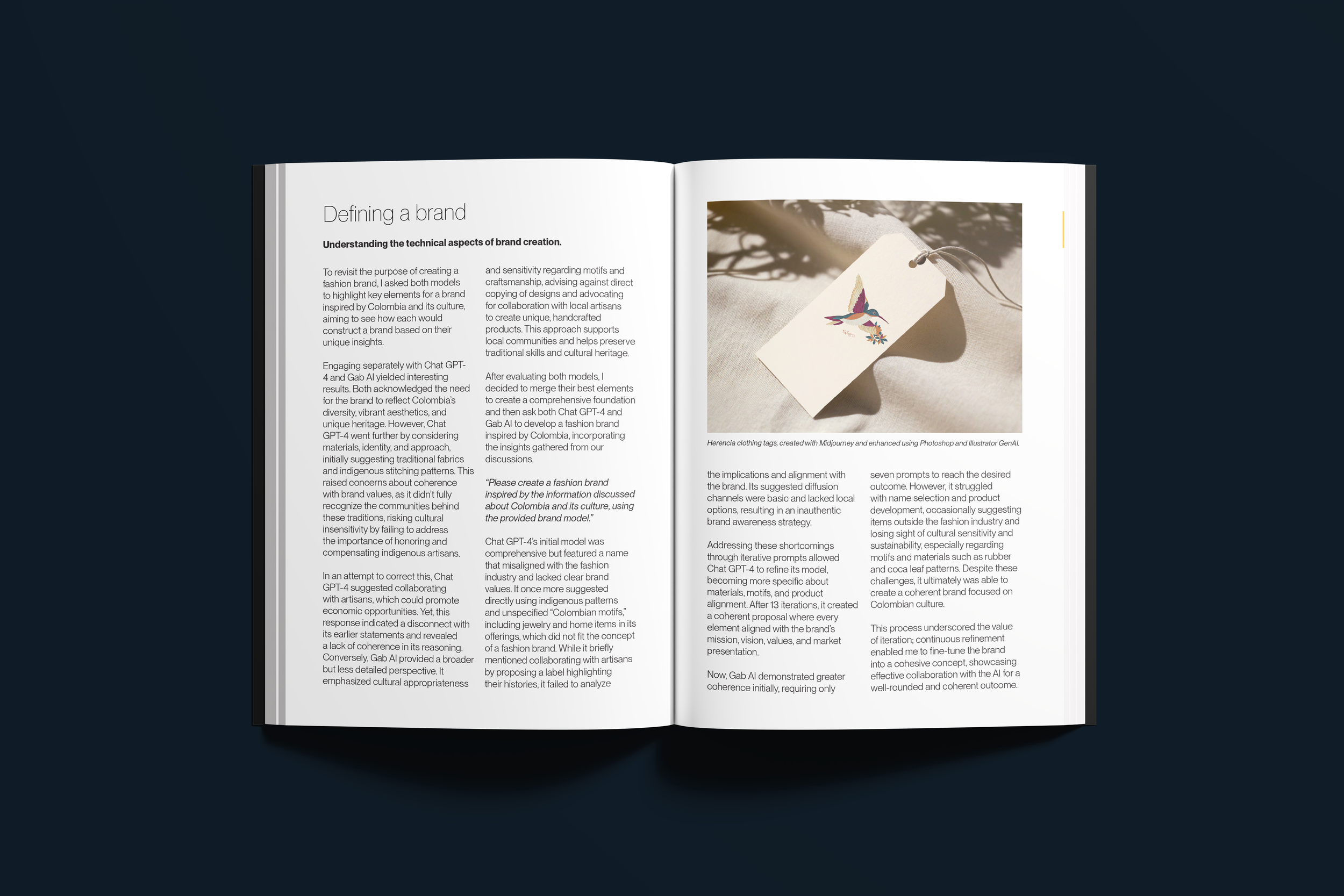
AI Dialectics in Fashion explores this question through the creation of a fashion brand inspired by Colombia’s artisanal and cultural heritage. Rather than functioning solely as a branding exercise, the project uses design as a research framework to critically examine how generative AI tools interpret, translate, and represent complex cultural references.
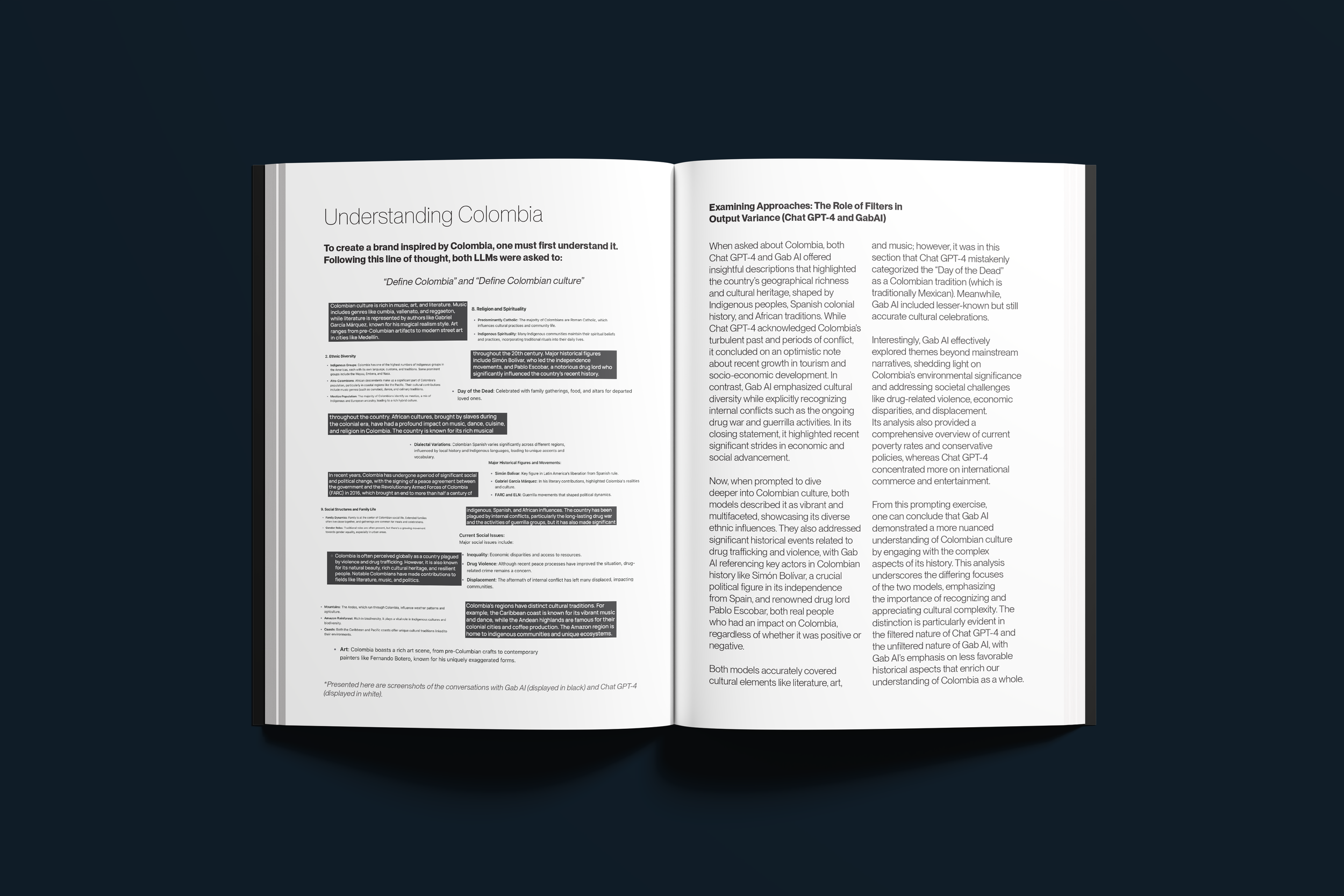
Using ChatGPT-4, Gab AI, and Midjourney, the project investigates both the capabilities and limitations of these technologies through the development of a visual identity, evaluating aspects such as concept generation, prompt construction, visual coherence, and the challenges of cultural translation.
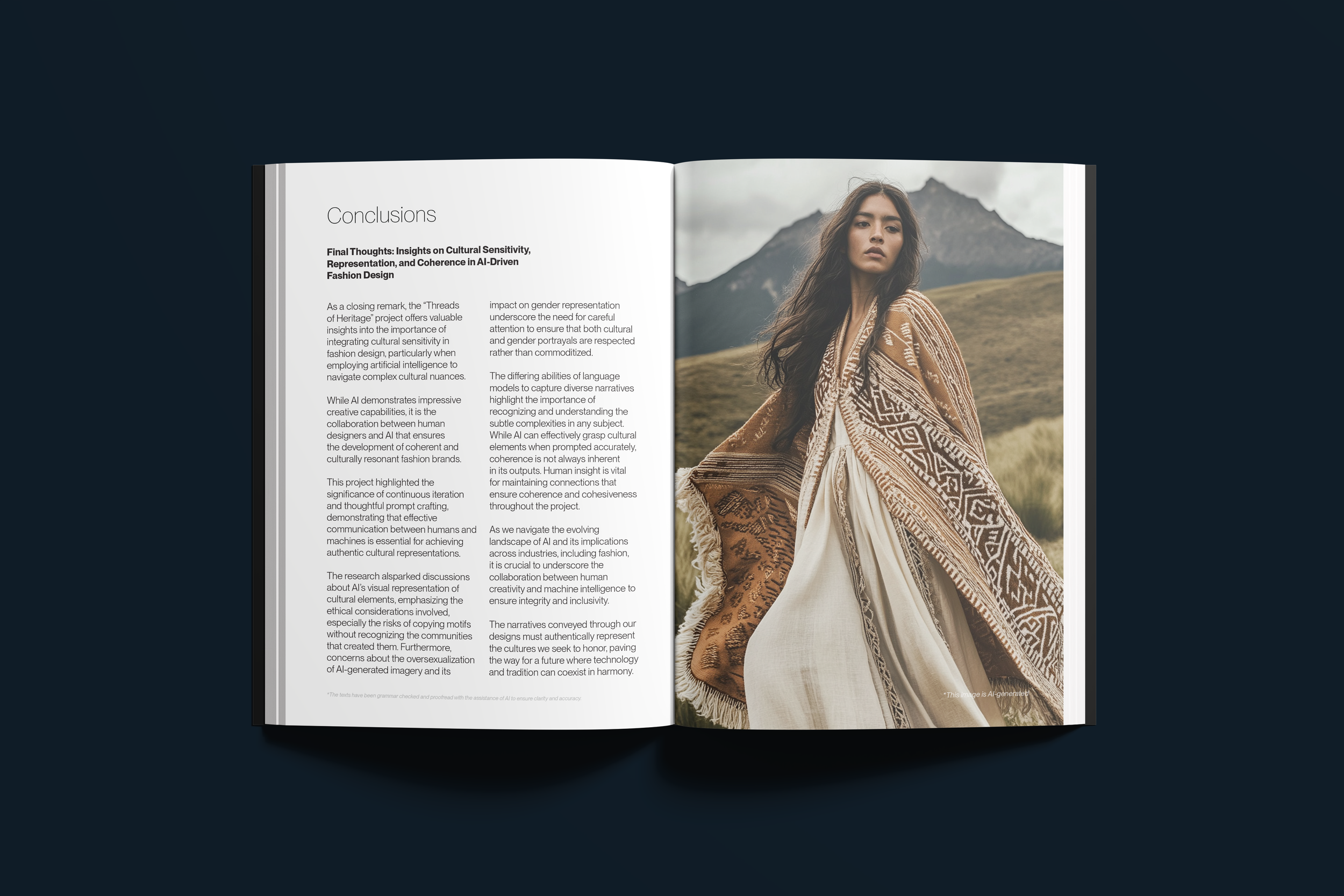
While these tools proved valuable for conceptual exploration and image production, the process also revealed significant limitations. Recurring patterns of cultural simplification, stereotypical interpretations, and the sexualization of the female figure emerged throughout the outputs, highlighting how these systems continue to reproduce biases embedded within their training data.
Beyond assessing the results themselves, the project questions what happens when processes of cultural interpretation are delegated to generative systems. The identity of a community, its traditions, histories, and forms of knowledge cannot be reduced to visual references or statistical patterns. Any culturally inspired work requires research, context, and direct engagement with the communities that inform the creative process.
Ultimately, AI Dialectics in Fashion offers a critical reflection on the role of artificial intelligence within the creative industries. Rather than positioning AI as a replacement for human creativity, the project understands it as a tool capable of expanding processes of exploration and experimentation, while remaining unable to replace situated knowledge, cultural sensitivity, and the value of human craft.
This work is featured in ‘Artificial Intelligence in Contemporary Design Praxis: Part II’.